China Develops AI-Powered Autonomous Transmission Electron Microscope
A Chinese research team has built an intelligent transmission electron microscope capable of fully autonomous operation.
China Develops AI-Powered Autonomous Transmission Electron Microscope
A Chinese research team has developed a transmission electron microscope capable of autonomous operation using artificial intelligence, state broadcaster CGTN reported on May 24, 2026. The development marks a significant advance in scientific instrumentation, removing the requirement for continuous expert human control of a tool central to materials science, biology, and semiconductor research.
What Happened
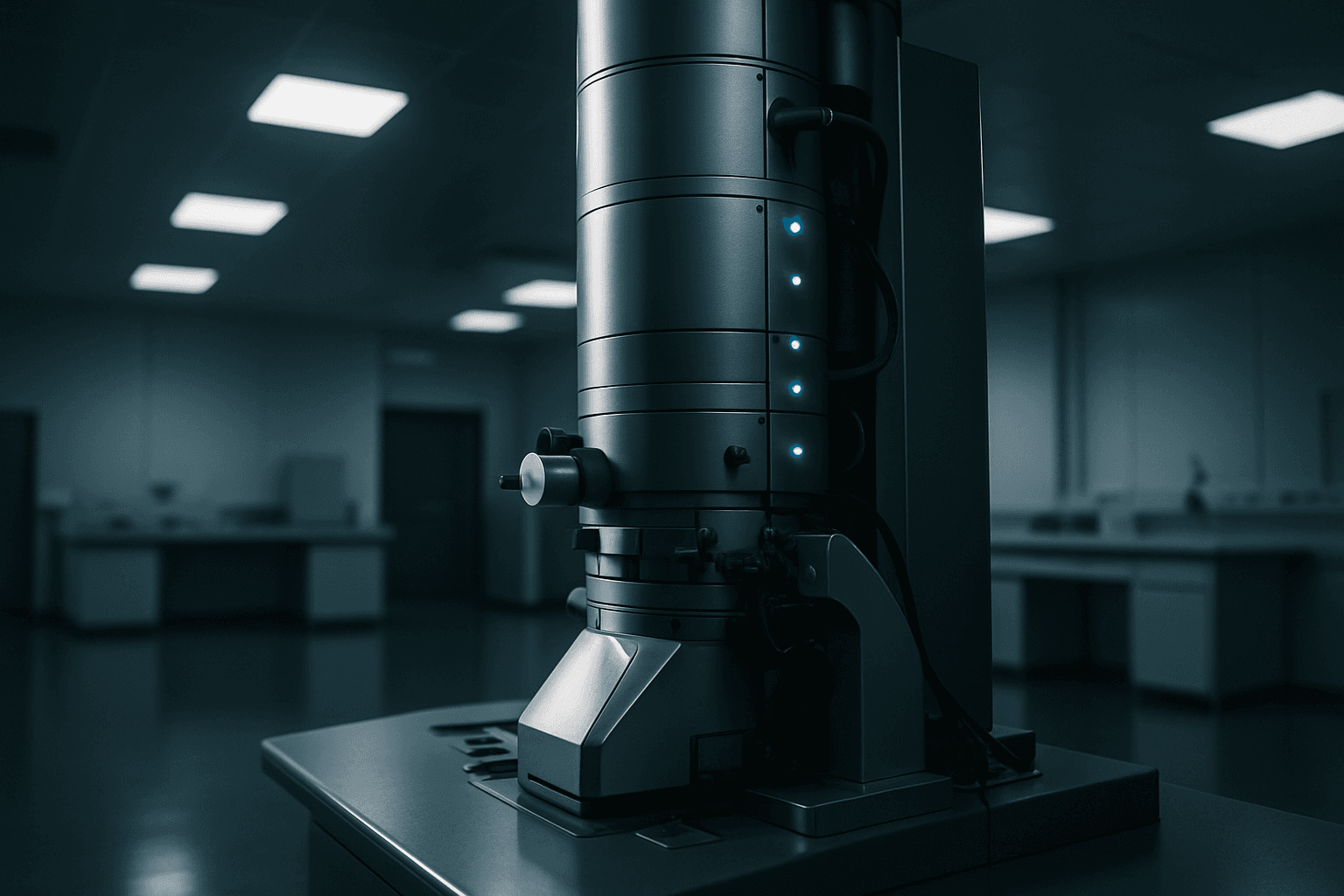
Researchers in China announced the creation of an intelligent transmission electron microscope, referred to as an intelligent TEM, that can operate without constant manual guidance from a trained technician. The system uses artificial intelligence to manage the complex sequencing of tasks that traditional electron microscopy requires, including specimen alignment, focus adjustment, and image acquisition. CGTN described the development as a breakthrough in scientific instrumentation. No specific research institution or university was named in the wire summary available at time of publication.
Background
Transmission electron microscopes are among the most technically demanding instruments in modern scientific research. They work by passing a beam of electrons through an ultra-thin specimen and detecting the resulting transmission to produce images at atomic or near-atomic resolution. Operating a conventional TEM requires years of specialist training. A single session can demand continuous real-time adjustments from a skilled operator to maintain beam stability, correct for drift, and optimise imaging conditions. The instruments are used extensively in semiconductor fabrication quality control, pharmaceutical and biological research, materials science, and nanotechnology development.
The global TEM market is concentrated among a small number of manufacturers, primarily Thermo Fisher Scientific and JEOL, both of which have separately explored automation features in recent product generations. Prior automation efforts have focused on specific sub-tasks such as automated stage navigation or image stitching, rather than end-to-end autonomous operation of the full microscopy workflow.
China has identified advanced scientific instrumentation as a strategic priority in its national technology development plans, with the government directing substantial funding toward reducing reliance on foreign-manufactured laboratory equipment. Transmission electron microscopes have been subject to export restrictions and licensing scrutiny in international trade discussions involving high-end semiconductor and research equipment.
What the System Does
The intelligent TEM described by CGTN is reported to handle autonomous operation across the stages of a microscopy session. The AI component manages decision-making processes that would ordinarily require a trained operator to intervene continuously, allowing the instrument to conduct imaging tasks independently. The wire report did not specify the resolution specifications of the system, the AI architecture underlying the autonomous control layer, or the range of specimen types on which the instrument has been tested.
No peer-reviewed publication reference or institutional affiliation was cited in the initial wire report. Performance benchmarks comparing the system to manually operated instruments were not included in available reporting at time of publication.
Why It Matters in Practice
If the autonomous capabilities perform as described across a range of real-world research conditions, the instrument could reduce the operator expertise required to run TEM sessions, potentially expanding access to high-resolution electron microscopy in research environments that lack specialist staff. It could also increase throughput in industrial quality-control applications, such as semiconductor wafer inspection, where repeated imaging tasks are time-intensive under manual operation.
The development also carries relevance to China's domestic scientific equipment sector. Advanced analytical instruments including electron microscopes have been cited in trade and export-control discussions between China, the United States, and allied governments, making domestic production capacity a matter of both scientific and policy interest.
What Comes Next
Further technical details, including peer-reviewed findings and institutional attribution, are expected to be released as the research team pursues formal publication of their results.
Get our editors' take on what it all means. Read the Editor's Blog →