AI Tool Deciphers 3,500-Year-Old Cuneiform Script From Forgotten Empire
A new AI tool called Palaeographicum has identified individual scribes in ancient cuneiform tablets, unlocking new data about a lost civilization.
What Happened
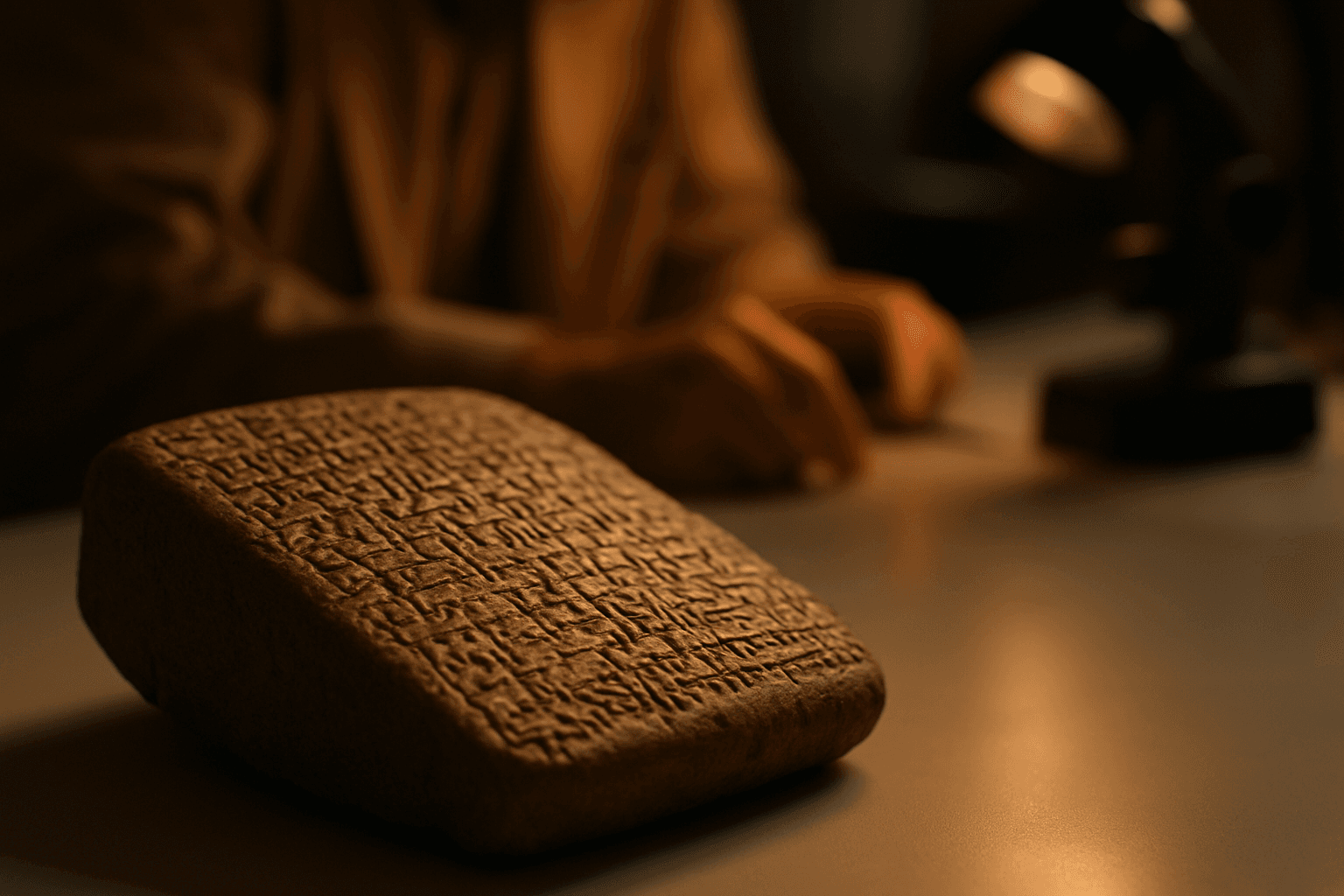
Researchers have deployed an artificial intelligence tool called Palaeographicum to analyze cuneiform handwriting on clay tablets dating back approximately 3,500 years, identifying subtle stylistic differences that distinguish the work of individual scribes. The tool has produced findings that shed new light on a previously obscure ancient empire, according to reporting by The Economic Times.
Background
Cuneiform is one of the earliest known writing systems, developed in ancient Mesopotamia and recorded by pressing a stylus into wet clay tablets. Thousands of such tablets survive in museum collections and archaeological sites worldwide. Deciphering and categorizing them has historically required years of specialist training, with progress constrained by the sheer volume of available material and the difficulty of distinguishing subtle variations in handwriting across tablets separated by centuries and geography.
The empire referenced in the reporting has not been widely covered in mainstream historical scholarship, and the AI analysis appears to be surfacing documentary evidence that expands the known record of its administrative and cultural activity.
How the Tool Works
Palaeographicum applies machine learning techniques to detect minute differences in the way individual scribes formed cuneiform characters. By treating handwriting as a set of measurable visual features rather than simply readable text, the system can cluster tablets by likely author, date range, or institutional origin. This approach, known broadly as computational palaeography, has been used in earlier, smaller-scale projects on Greek and Latin manuscripts, but its application to cuneiform at scale represents a significant expansion of the method.
The tool does not simply translate the tablets. It performs authorship attribution and stylistic classification, tasks that previously required a trained cuneiformist working manually over extended periods.
What the Findings Reveal
According to the reporting, the AI analysis has identified patterns in the tablets that point to the organizational structure and geographic reach of the empire in question. By attributing tablets to specific scribal hands or scribal schools, researchers can draw inferences about administrative networks, trade relationships, and the movement of trained personnel across different sites. The findings suggest the empire was more administratively complex than previously documented in the scholarly record.
The Economic Times report does not specify the number of tablets analyzed, the institution or institutions behind the Palaeographicum tool, or the peer-review status of the underlying research.
Context: AI and Ancient Languages
Palaeographicum's application to cuneiform follows a series of high-profile AI deployments in the study of ancient texts. In 2023, researchers used machine learning to read carbonized Herculaneum scrolls that had been physically unreadable since the eruption of Vesuvius in 79 CE. Google DeepMind and academic partners published work in 2024 applying AI to fragmentary ancient Greek inscriptions. These projects have established a pattern of using neural networks trained on known examples to fill gaps in partially legible or highly fragmented historical documents.
Cuneiform presents distinct challenges compared to alphabetic scripts. The writing system includes hundreds of distinct signs, and regional and temporal variations in sign forms are substantial. The volume of unread or only partially catalogued cuneiform tablets in collections such as those held by the British Museum and the University of Pennsylvania is estimated in the hundreds of thousands.
What It Means in Practice
If validated, the Palaeographicum methodology could accelerate the cataloguing and analysis of cuneiform collections that have remained understudied due to a shortage of trained specialists. Institutions holding large tablet collections could use the tool to prioritize which tablets warrant detailed human examination and to identify previously unrecognized connections between geographically dispersed artefacts.
The research team is expected to publish further findings as the tool is applied to additional tablet collections.
Get our editors' take on what it all means. Read the Editor's Blog →