AI Tools Help Scientists Begin Decoding the Language of Birds
Researchers are using artificial intelligence to identify shared vocal patterns in zebra finches, advancing the field of human-animal communication.
AI Tools Help Scientists Begin Decoding the Language of Birds
Artificial intelligence systems are enabling scientists to identify structured, repeating vocal patterns in zebra finches, according to new research reported this week. The findings bring researchers a step closer to establishing a framework for cross-species communication between humans and animals.
What Happened
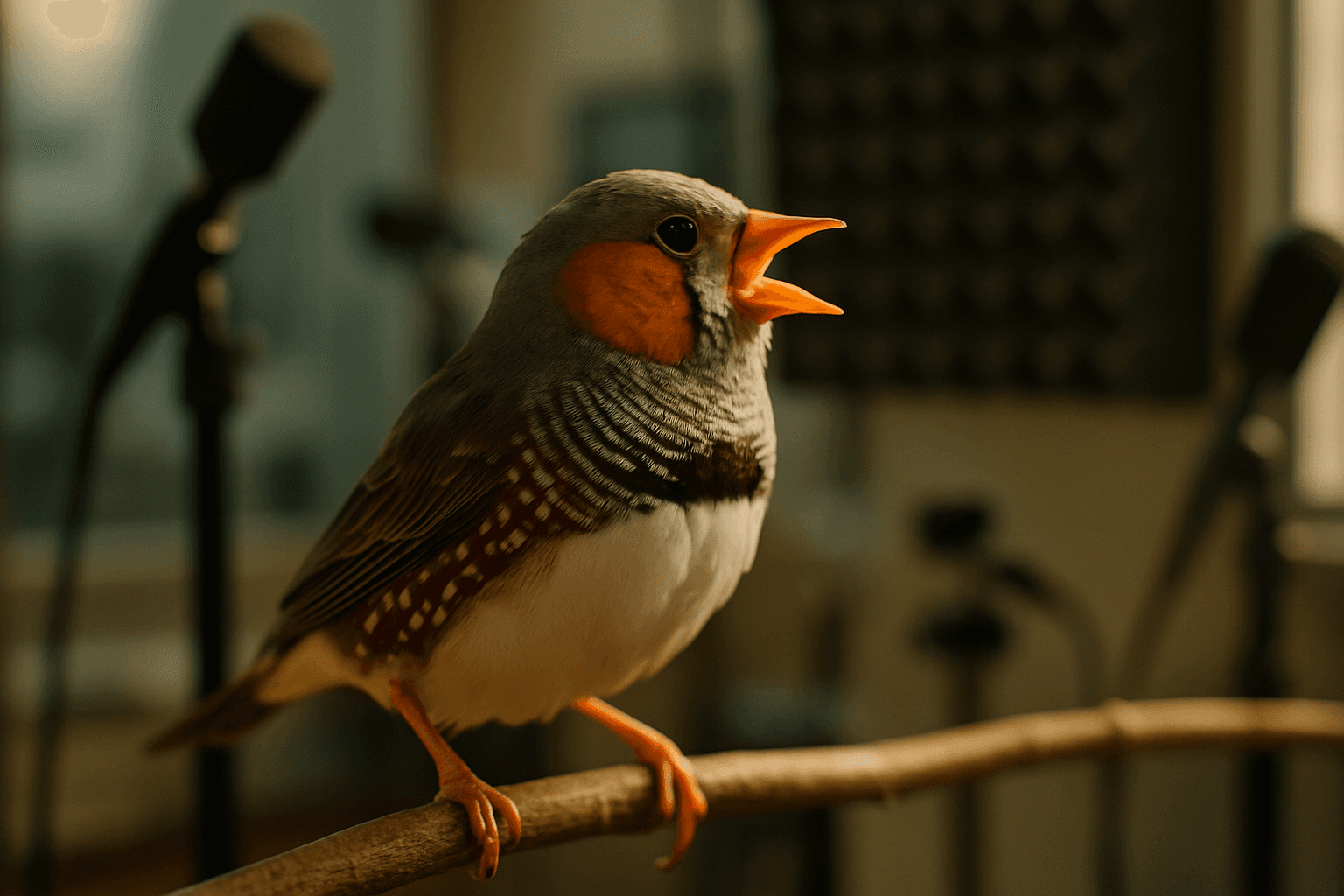
Scientists studying zebra finch vocalizations have applied AI-based analysis tools to large volumes of birdsong recordings, identifying what researchers describe as a shared vocabulary within the species. The AI systems were used to detect recurring acoustic units across individual birds, suggesting a level of structural consistency in the birds' vocal output that manual analysis had not previously captured at scale.
The research, highlighted by Gulf News, represents one of several ongoing efforts globally to apply machine learning to animal communication, with zebra finches serving as a primary model organism due to the complexity and learnability of their songs.
Background
Zebra finches have been a subject of bioacoustic research for decades. The birds learn their songs, making them one of a limited number of non-human species that acquire vocalizations through imitation, a trait shared with humans. That characteristic has made them a standard subject in studies examining the neural and behavioral basis of vocal learning.
Previous research relied on spectrographic analysis and manual annotation, methods that are time-intensive and limited in the volume of data they can process. The application of AI, specifically machine learning models trained to recognize and cluster acoustic features, allows researchers to analyze thousands of recordings in the time it would previously have taken to examine a fraction of that number.
The broader field of animal communication research has seen increased AI involvement in recent years. Separate projects have applied similar tools to whale song, dolphin clicks, and primate vocalizations, with the shared goal of identifying whether non-human species use consistent, rule-governed communication systems.
What the Research Involves
The AI systems applied to zebra finch recordings work by segmenting audio into discrete units and comparing those units across individual birds and recordings. When the models identify clusters of acoustically similar units appearing repeatedly across different birds in similar behavioral contexts, researchers interpret that as evidence of shared structure.
The distinction between a shared vocabulary and a true language involves additional criteria, including syntax, reference, and intentionality, that the current research does not yet establish. The findings at this stage identify structural regularity in the vocalizations rather than confirmed semantic content.
Researchers have noted that the AI tools do not translate birdsong into human language. Instead, they map the internal structure of the vocalizations, identifying which sounds co-occur, in what sequences, and under what conditions. That mapping forms the foundational data from which communication models can be built.
What It Means in Practice
If researchers can establish consistent structural units in zebra finch vocalizations and link those units to specific behaviors or environmental stimuli, it would provide a basis for developing response systems. Such a system would not constitute two-way conversation in the conventional sense, but it would allow controlled experimental testing of whether birds respond differently to playback of specific acoustic units in varying contexts.
The research also has implications for how AI tools are evaluated in bioacoustics. The same model architectures used in human speech recognition, including transformer-based systems trained on sequential data, have shown utility in processing non-human animal sounds, broadening their potential application beyond the commercial speech-processing market.
The zebra finch work forms part of a wider scientific program examining vocal learning across species, and researchers involved in related projects have indicated that comparative datasets across multiple bird species are currently being assembled for future analysis.
Get our editors' take on what it all means. Read the Editor's Blog →