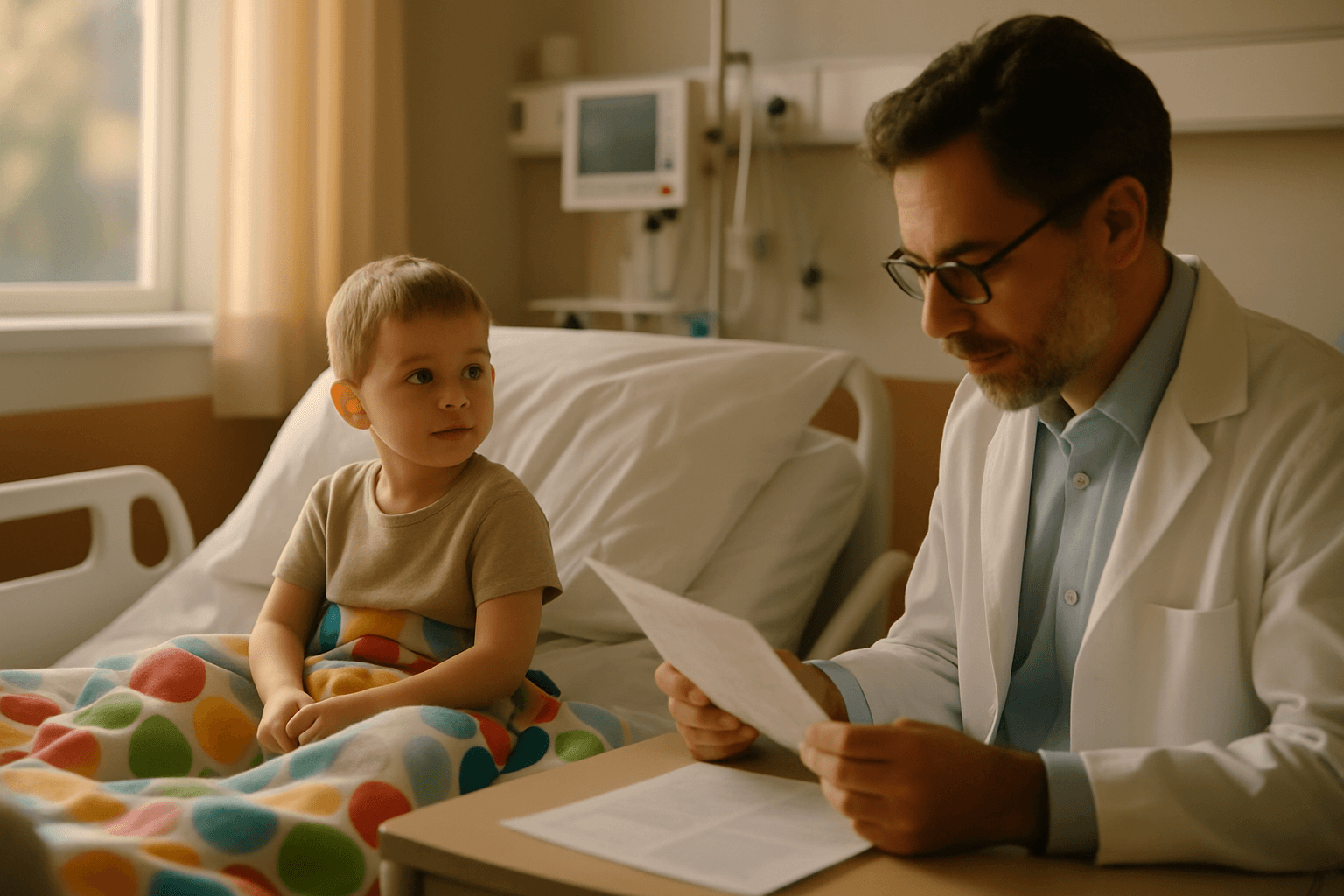
Boston Children's Hospital AI Diagnoses 18 Rare Disease Cases
Researchers used OpenAI's o3 model to identify diagnoses for 18 children whose rare diseases had previously stumped physicians.
What Happened
Researchers at Boston Children's Hospital have used OpenAI's o3 artificial intelligence model to identify diagnoses for 18 children with rare diseases that had previously gone unresolved by treating physicians. The findings, reported by NBC News on June 18, 2026, mark a documented clinical application of a large language model in pediatric rare disease diagnosis.
Background
Rare diseases affect an estimated 300 million people worldwide, according to the National Institutes of Health, and diagnostic delays of five years or more are common. Many rare disease patients, particularly children, cycle through multiple specialists before receiving a confirmed diagnosis. The process is resource-intensive and time-sensitive, as delayed diagnoses can affect treatment outcomes and disease progression.
OpenAI's o3 model is a reasoning-focused large language model. It belongs to a generation of AI systems designed to work through complex, multi-step problems rather than retrieve pattern-matched responses. The model has previously been evaluated on scientific and mathematical benchmarks, but its application in clinical diagnostic settings represents a different category of use.
Boston Children's Hospital is one of the largest pediatric research hospitals in the United States and has an established record of collaboration with technology and research institutions on computational medicine projects.
What the Researchers Did
The research team applied the o3 model to cases involving children with undiagnosed rare diseases. The specific methodology, including how patient data was structured and submitted to the model, was not detailed in the wire report. The outcome reported is 18 diagnoses identified across the case set reviewed.
The wire report does not specify the total number of cases submitted to the model, the time period over which cases were collected, or whether the diagnoses have been independently confirmed through clinical follow-up. It also does not indicate whether the study has been published in a peer-reviewed journal or is currently under review.
What It Means in Practice
The reported findings add to a growing body of work examining large language models in clinical diagnostic support roles. Earlier wire reports in this cycle covered a separate study published in The Lancet Oncology, in which researchers at the Netherlands Cancer Institute developed an AI tool capable of measuring mesothelioma tumors at physician-level accuracy. That story has already been covered.
In the Boston Children's case, the application targets a specific gap in existing diagnostic infrastructure: cases that have already failed conventional diagnostic pathways. The o3 model was applied to patients who had not received diagnoses through standard clinical evaluation, positioning the tool as a secondary or escalation resource rather than a front-line screening instrument.
The use of AI in rare disease diagnosis raises questions about data privacy, clinical validation standards, and liability that are currently being addressed through regulatory frameworks at the U.S. Food and Drug Administration and equivalent bodies in other jurisdictions. The wire report does not indicate whether the Boston Children's application was conducted under any specific regulatory review or institutional review board protocol, though research of this nature at a major academic medical center would typically require IRB oversight.
OpenAI has not issued a separate public statement about the findings based on available wire reports.
What Comes Next
Boston Children's Hospital researchers have not announced a publication timeline or a follow-on clinical trial based on the available wire reporting, and further details on study design and diagnostic confirmation are expected as the research moves toward formal peer review.
Get our editors' take on what it all means. Read the Editor's Blog →