China Claims Kilowatt-Level Wireless Power Delivery From Space
China says its Zhuri system wirelessly delivered kilowatt-level power to moving targets, advancing space-based solar research.
China Claims Kilowatt-Level Wireless Power Delivery From Space
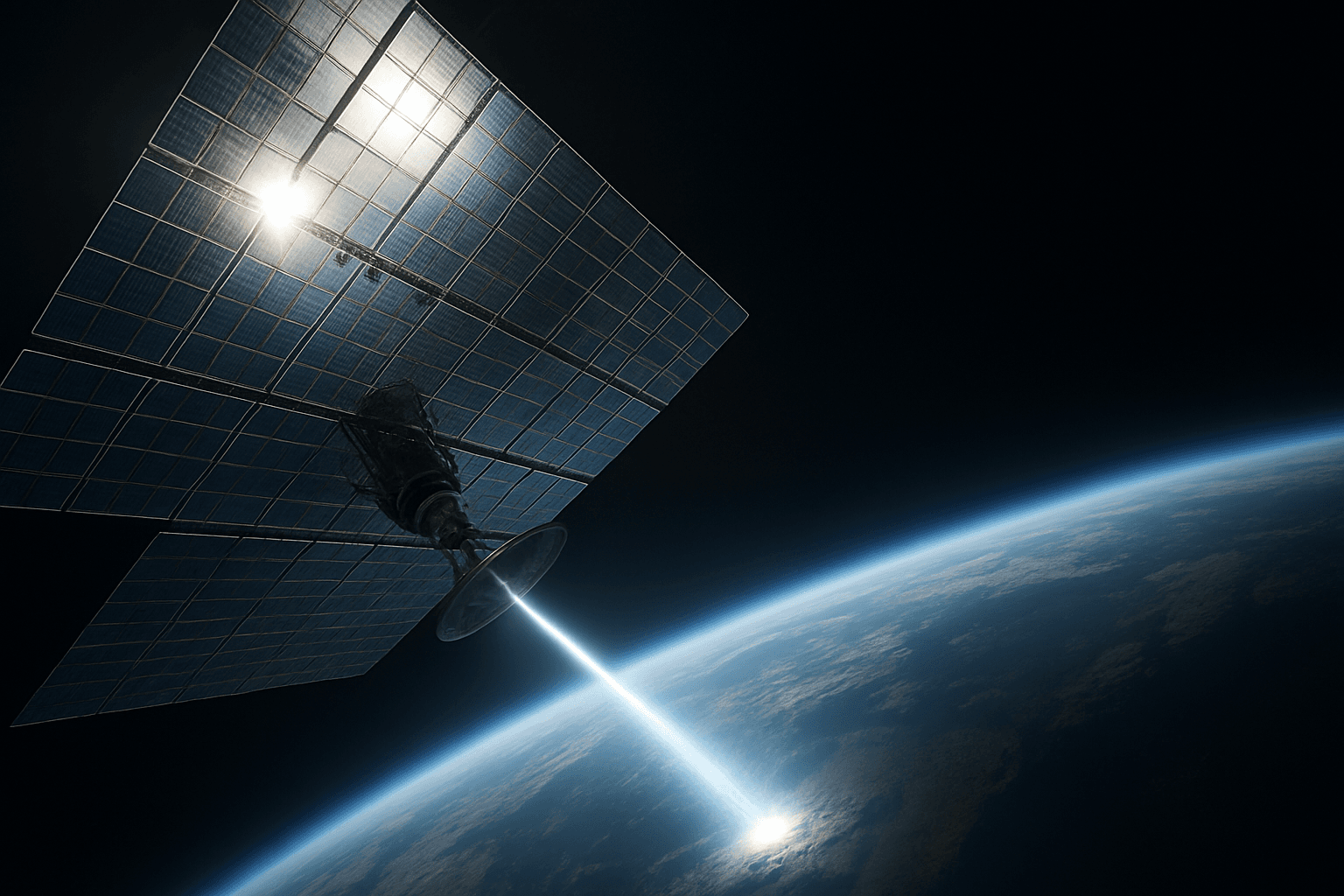
China has announced that its Zhuri space-based solar power system successfully delivered kilowatt-level wireless power to moving targets, according to a report published by TechRepublic. The announcement marks a stated advance in a technology that researchers have pursued for decades as a potential source of continuous, weather-independent energy.
What Happened
Chinese researchers reported that the Zhuri system transmitted kilowatt-level power wirelessly to moving targets, according to the published account. The test represents a step beyond earlier demonstrations that were limited to stationary receivers or lower power levels. Specific details about the transmission distance, the altitude of the system, and the duration of the power delivery were not disclosed in the available wire report.
Background
Space-based solar power is a concept that has been studied by governments and research institutions since the 1970s. The premise is that solar panels placed in orbit can collect sunlight continuously, without interference from Earth's atmosphere or the day-night cycle, and then beam that energy to the ground using microwave or laser transmission. China has publicly committed to developing a full-scale space solar power station and has outlined a roadmap that includes progressively larger in-orbit demonstrations. The Zhuri program is part of that stated national research effort.
Other countries have pursued similar research. The United States Naval Research Laboratory conducted a space solar power transmission experiment in 2023, and the European Space Agency has outlined its own Solaris initiative. Japan has also conducted ground-based wireless power transmission tests relevant to the technology.
What the Zhuri Test Involved
The Zhuri system reportedly achieved wireless power delivery at the kilowatt level to targets that were in motion, rather than fixed on the ground. Prior demonstrations in space solar power research have generally operated at much lower power levels, making kilowatt-level output a quantitative step in the field. Delivering power to a moving target, rather than a stationary receiver, also addresses one of the technical challenges associated with practical deployment scenarios.
The wire report did not specify which organization within China conducted the test, what type of wireless transmission method was used, or where the receiving targets were located. No independent verification of the results was cited in the available reporting.
Scale and Context
Kilowatt-level power is modest relative to what a commercial space solar power station would need to deliver. A utility-scale system would require transmitting hundreds of megawatts or more to be economically viable. However, kilowatt-level demonstrations are a recognized intermediate milestone in the development pathway, allowing researchers to test the behavior of transmission and reception hardware under realistic conditions before scaling.
China's stated long-term goal, outlined in prior government documents, is to have a megawatt-class space solar power demonstrator in orbit by around 2030 and a gigawatt-scale commercial system operational by 2050. Those timelines are Chinese government projections and have not been independently assessed.
International Context
The announcement comes as multiple nations are accelerating research into energy security and alternative power sources. Space-based solar power has attracted renewed attention from defense and energy agencies in the United States, United Kingdom, and Europe because of its potential to deliver power independent of ground-based infrastructure. The United Kingdom's Space Energy Initiative has published feasibility studies, and the U.S. Air Force Research Laboratory has funded related transmission experiments.
No international body currently oversees or verifies national claims related to space solar power testing, meaning announced results rely on the disclosures made by the reporting government or institution.
What Comes Next
China has not announced a specific date for its next Zhuri system demonstration or provided a timeline for publishing peer-reviewed results from the reported test.
Get our editors' take on what it all means. Read the Editor's Blog →