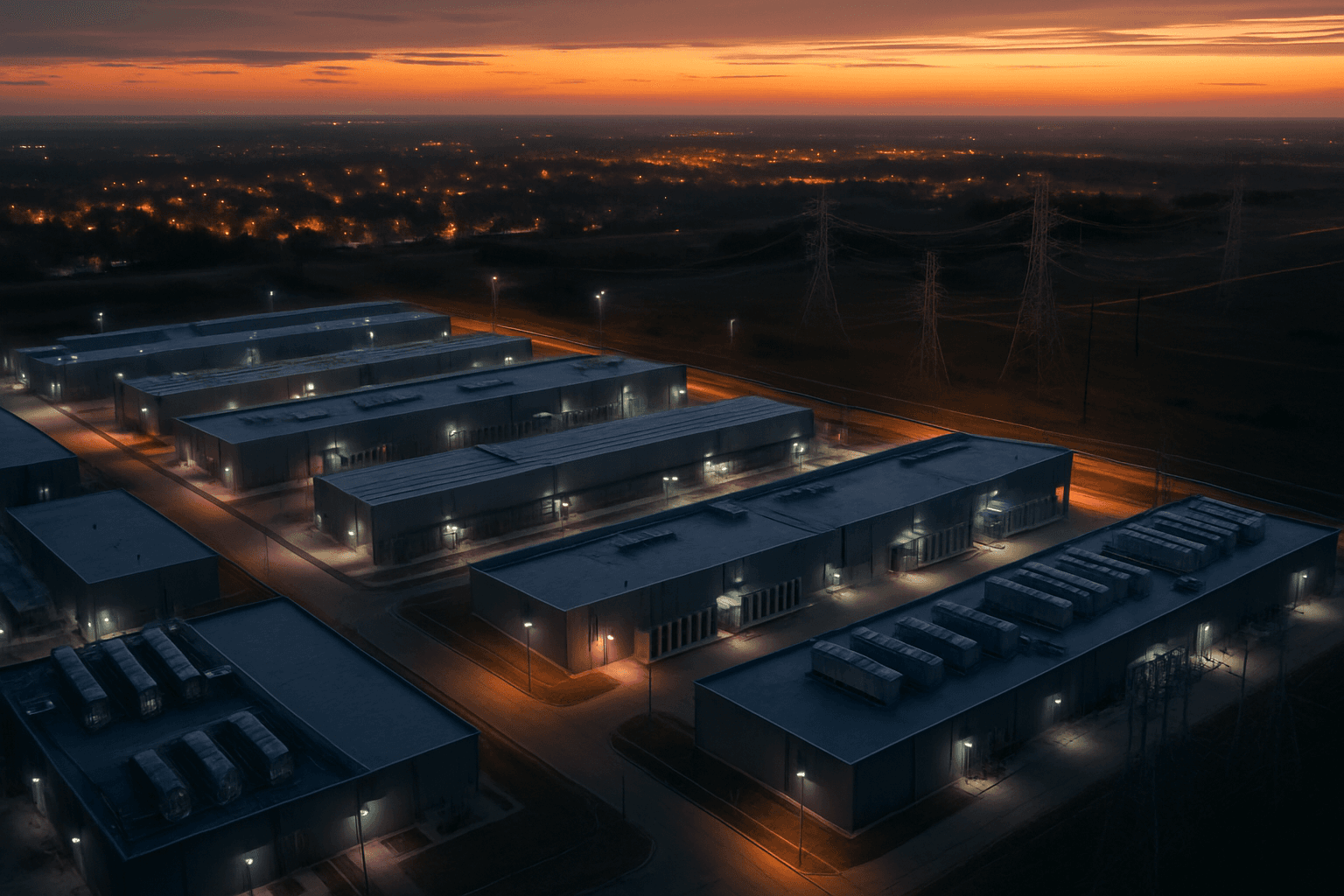
America's Data Centre Backlash Reshapes Global AI Competition
Growing local opposition to data centre construction in the United States is altering the geography of global AI infrastructure development.
What Happened
Opposition to data centre construction across multiple U.S. states is emerging as a significant variable in the global artificial intelligence infrastructure race, according to a report published by Middle East Online. Communities and local governments are pushing back against large-scale facilities citing concerns over water consumption, energy demand, land use, and noise, creating new constraints on where American AI companies can build the computing capacity their models require.
Background
The global AI competition has traditionally been framed around three resources: algorithms, specialised talent, and advanced semiconductors, particularly the high-end graphics processing units produced by companies such as Nvidia. Data centres, the physical facilities that house the servers running AI workloads, have received comparatively less public attention, even as demand for them has accelerated sharply alongside the commercial deployment of large language models and related systems.
Data centres are resource-intensive infrastructure. Large hyperscale facilities can consume tens of millions of gallons of water annually for cooling and draw electricity equivalent to the consumption of tens of thousands of households. As more facilities have been proposed or approved in suburban and rural areas across the United States, organised local opposition has increased in states including Virginia, which hosts the world's largest concentration of data centre capacity, as well as Georgia, Texas, and the Pacific Northwest.
Virginia's Loudoun County, long nicknamed "Data Centre Alley," has faced repeated debates over zoning approvals and utility strain. Several county jurisdictions have imposed temporary moratoriums on new data centre permits in recent years while reviewing their land-use frameworks.
What the Backlash Involves
Opposition from residents and local officials has taken several forms. Concerns raised in public hearings and planning disputes include the strain large facilities place on local power grids, the volume of water drawn from municipal supplies or local aquifers, noise generated by cooling systems and backup generators, and the relatively limited number of permanent jobs created relative to the scale of the infrastructure investment.
Some communities have also questioned the tax incentive packages offered by state and local governments to attract data centre investment, arguing that the public benefits do not offset the environmental and infrastructure costs.
U.S. technology companies have responded by announcing investments in renewable energy procurement, water recycling systems, and alternative cooling technologies. Some have also shifted siting strategies toward regions with lower population density, more abundant renewable power, or fewer regulatory barriers.
The Global Dimension
The domestic constraints facing U.S.-based AI developers have opened opportunity for other regions seeking to attract data centre investment and establish their own AI computing capacity. Countries in the Middle East, Southeast Asia, and parts of Europe and Latin America have positioned themselves as alternative or complementary locations, offering land, energy agreements, and regulatory frameworks designed to accelerate approvals.
Saudi Arabia, the United Arab Emirates, and Qatar have each announced large-scale data centre and AI infrastructure initiatives in recent years, backed by sovereign wealth funds and state-directed investment programmes. These projects are intended in part to reduce dependence on foreign AI infrastructure and to position Gulf states as competitive nodes in the global AI supply chain.
The geographic distribution of data centre capacity has direct implications for AI sovereignty, a term used by governments and researchers to describe the degree to which a country or region can develop, deploy, and control AI systems independently of foreign infrastructure.
What It Means in Practice
If U.S. regulatory and community resistance continues to slow domestic data centre permitting and construction, American AI companies may face longer lead times for capacity expansion, higher development costs from site selection in less contested locations, or increased reliance on international facilities operated by cloud partners. Competing nations that streamline approvals and offer stable energy supplies may attract a larger share of new investment.
U.S. federal and state-level policymakers are currently reviewing permitting frameworks for energy infrastructure, including provisions that affect large power consumers such as data centres, with several legislative proposals under consideration in Congress and in state legislatures across the country.
Get our editors' take on what it all means. Read the Editor's Blog →