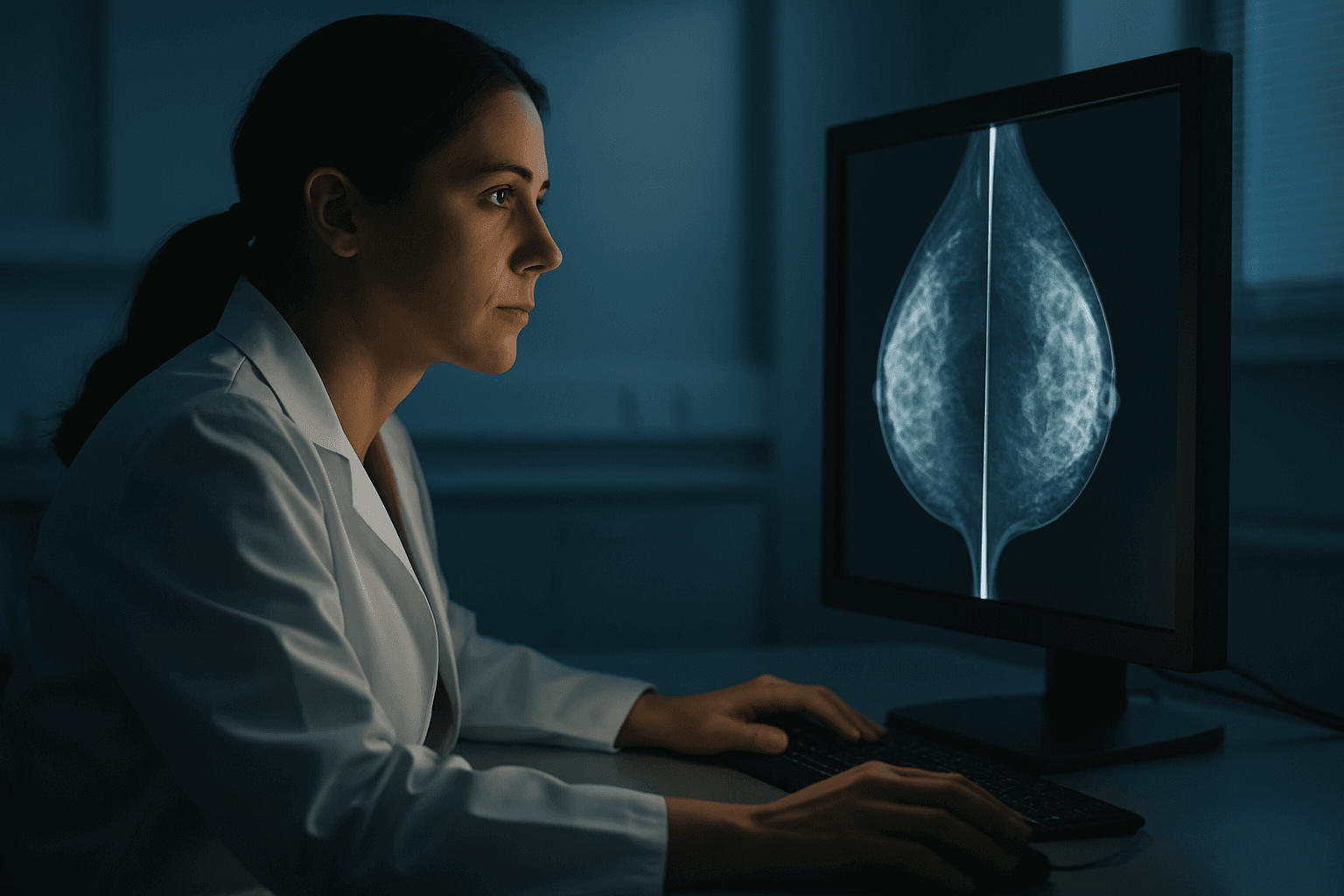
MASAI Trial Correspondence Exposes Evidence Gap in AI Mammography Screening
Lancet correspondence identifies a core evidentiary gap in AI mammography screening, noting performance gains rest on intermediate endpoints rather than mortality outcomes.
What Happened
A correspondence published in The Lancet has identified a significant evidentiary gap in the evidence base supporting AI-assisted mammography screening, specifically examining findings from the MASAI trial. The correspondence argues that performance improvements attributed to AI screening tools rely on intermediate endpoints, such as cancer detection rates and recall rates, rather than the long-term outcome data, including breast cancer mortality, that would be required to establish definitive clinical benefit.
Background
The MASAI trial, conducted in Sweden, is one of the largest randomised controlled trials to evaluate AI-assisted mammography screening in a real-world clinical setting. The trial enrolled more than 80,000 women and used an AI decision-support system to triage mammograms, reducing radiologist workload while aiming to maintain or improve cancer detection. Initial results, published in The Lancet Oncology in 2023, reported that AI-supported screening detected more cancers and reduced radiologist workload by approximately 44 percent compared with standard double reading.
Those findings drew substantial attention from health systems, technology developers, and screening programme administrators across Europe and beyond, with several health authorities citing the MASAI data when evaluating whether to integrate AI tools into national breast cancer screening programmes.
What the Correspondence Argues
The Lancet correspondence, as reported by The Clinical Trial Vanguard, focuses on the distinction between surrogate endpoints and hard clinical outcomes. The authors contend that detecting more cancers, or detecting them at an earlier stage, does not automatically translate into reduced mortality, and that trial designs which do not track long-term survival data cannot demonstrate that AI screening confers the clinical benefit that would justify widespread adoption.
The correspondence identifies what it describes as overdiagnosis risk, the detection of cancers that would never have caused harm during a patient's lifetime, as a concern that intermediate endpoint data cannot adequately address. Higher detection rates, the authors note, can reflect overdiagnosis rather than clinically meaningful early detection.
The piece also highlights that the radiologist workload reductions demonstrated in MASAI, while operationally significant, are process outcomes rather than patient outcomes, and should not be conflated with evidence of clinical efficacy.
The Broader Regulatory and Clinical Context
AI mammography tools are currently under active regulatory review in multiple jurisdictions. In the United States, the Food and Drug Administration has cleared several AI-assisted mammography products under the 510(k) pathway, which requires demonstration of substantial equivalence to existing devices rather than proof of improved clinical outcomes. In Europe, CE marking requirements similarly do not mandate mortality endpoint data for software-as-a-medical-device classifications in this category.
The question of what constitutes sufficient evidence for AI diagnostic tools has been a recurring point of discussion among radiologists, clinical trialists, and health technology assessment bodies. Several European health technology assessment agencies have flagged the absence of randomised controlled trial data showing mortality benefit as a limitation when evaluating AI screening submissions.
The MASAI trial was designed with long-term follow-up components, but final outcome data including mortality figures have not yet been published.
What It Means in Practice
Health systems that have cited MASAI interim data to support AI mammography procurement or pilot programmes may face renewed scrutiny from clinical governance bodies following the Lancet correspondence. The correspondence does not call for a halt to AI mammography research or deployment, but argues that evidence standards applied to AI screening tools should be consistent with those applied to other screening interventions, where mortality reduction is the accepted benchmark for programme justification.
Proponents of AI mammography tools, including trial investigators and several radiology societies, have previously argued that waiting for mortality data, which can take 10 to 15 years to accumulate in screening trials, would delay access to tools that demonstrably improve detection in interim analyses.
The MASAI trial investigators are expected to publish extended follow-up data, including longer-term outcome measures, in subsequent phases of the study.
Get our editors' take on what it all means. Read the Editor's Blog →