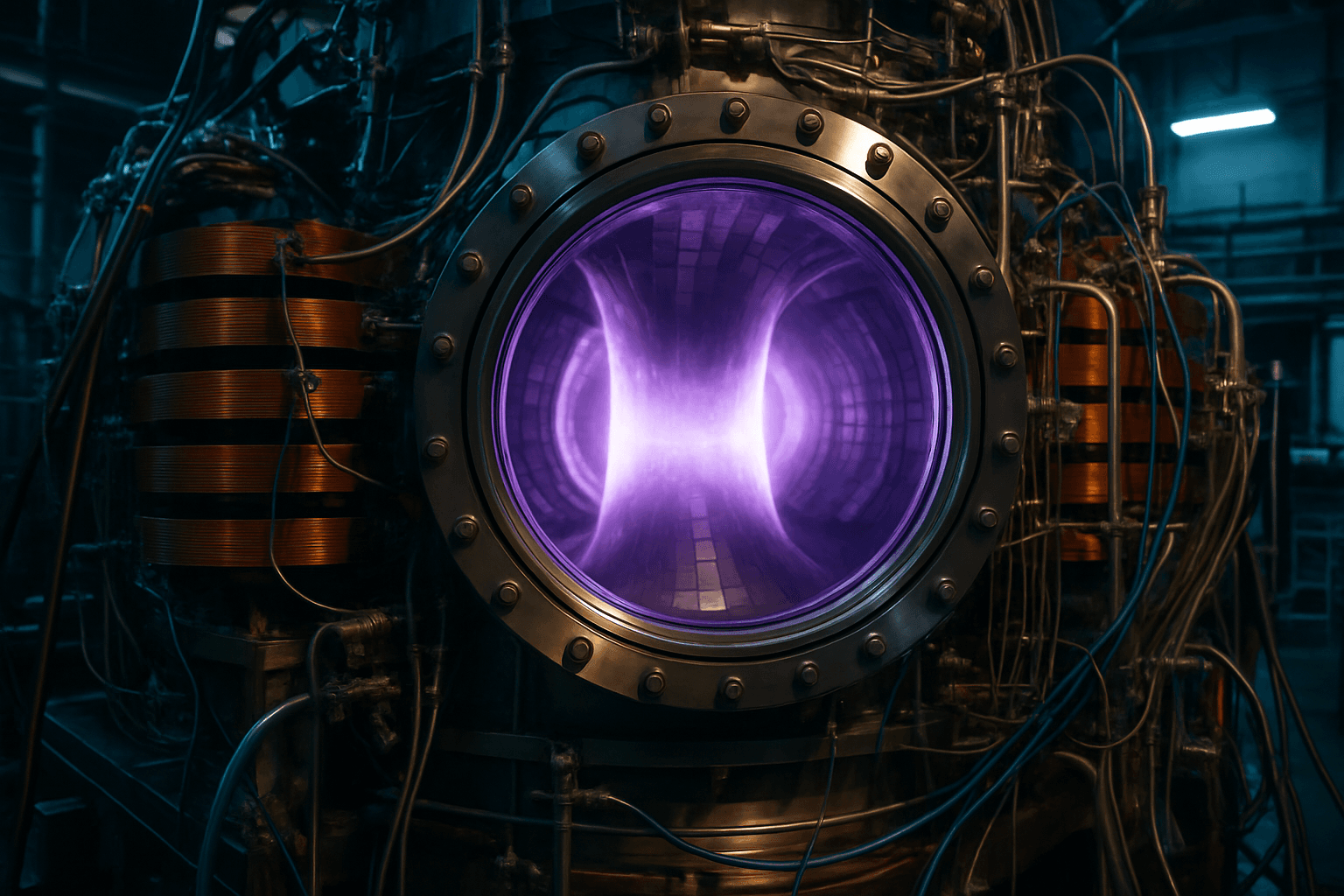
Mitsubishi Electric and Kyoto University Achieve Fusion Diagnostics Breakthrough
Mitsubishi Electric and Kyoto University have jointly developed a new fusion plasma diagnostics method with the National Institute for Fusion Science.
What Happened
Mitsubishi Electric Corporation, in collaboration with Kyoto University's Institute of Advanced Energy and Japan's National Institute for Fusion Science, has announced a breakthrough in fusion plasma diagnostics technology. The development, reported this week, advances the ability to measure and monitor the conditions inside fusion reactors, a capability considered critical to achieving stable, sustained fusion energy.
Background
Fusion energy research has accelerated globally over the past decade, driven by growing interest from both governments and private investors seeking carbon-free baseload power. Plasma diagnostics, the science of measuring the temperature, density, and behaviour of superheated plasma inside a fusion reactor, represents one of the persistent technical challenges in the field. Without accurate real-time diagnostics, operators cannot maintain the precise conditions required for a sustained fusion reaction.
Mitsubishi Electric, listed on the Tokyo Stock Exchange under the ticker 6503, is one of Japan's largest industrial electronics and electrical equipment manufacturers. The company has maintained long-standing research partnerships with Japanese academic institutions across power systems, semiconductors, and advanced manufacturing. Kyoto University's Institute of Advanced Energy focuses specifically on energy conversion and plasma physics research, and the National Institute for Fusion Science operates Japan's Large Helical Device, one of the world's most advanced experimental fusion facilities.
What the Breakthrough Involves
The wire report does not specify the precise diagnostic method developed, but the collaboration involves all three institutions contributing to a measurement technique applicable to fusion plasma environments. The National Institute for Fusion Science's involvement suggests the work has been tested or validated against an operational experimental fusion device, which distinguishes it from purely theoretical or laboratory-scale results.
Fusion plasma operates at temperatures exceeding 100 million degrees Celsius, far beyond the range of conventional measurement instruments. Diagnostic systems must therefore rely on indirect methods, including optical, microwave, and particle beam-based sensing, to infer plasma conditions without direct contact. Advances in this area directly affect how precisely fusion reactors can be controlled during operation.
Industry Context
The announcement comes at a time when fusion energy has moved from a long-range research horizon to a nearer-term engineering challenge. Private companies including Commonwealth Fusion Systems, TAE Technologies, and Helion Energy have attracted billions of dollars in investment on timelines targeting demonstration plants within this decade. Public programs, including ITER, the international fusion reactor under construction in southern France, are simultaneously pushing toward first plasma operations.
Japan has positioned itself as a central player in international fusion research, hosting significant portions of the ITER project's component manufacturing and running its own domestic fusion development programs. Mitsubishi Electric has previously supplied components to large-scale scientific and energy infrastructure projects, and this collaboration extends that role into the diagnostics domain.
Improved diagnostics are relevant not only to research reactors but also to the commercial fusion plants that developers aim to bring online later this decade. Accurate plasma measurement systems would need to operate reliably over long run times and under high-radiation conditions in any commercial facility.
What Happens Next
The three institutions have not publicly detailed a timeline for further testing, publication of peer-reviewed results, or commercial licensing of the diagnostics technology, and Mitsubishi Electric has not yet announced specific partnerships with fusion energy developers to deploy the method.
Get our editors' take on what it all means. Read the Editor's Blog →