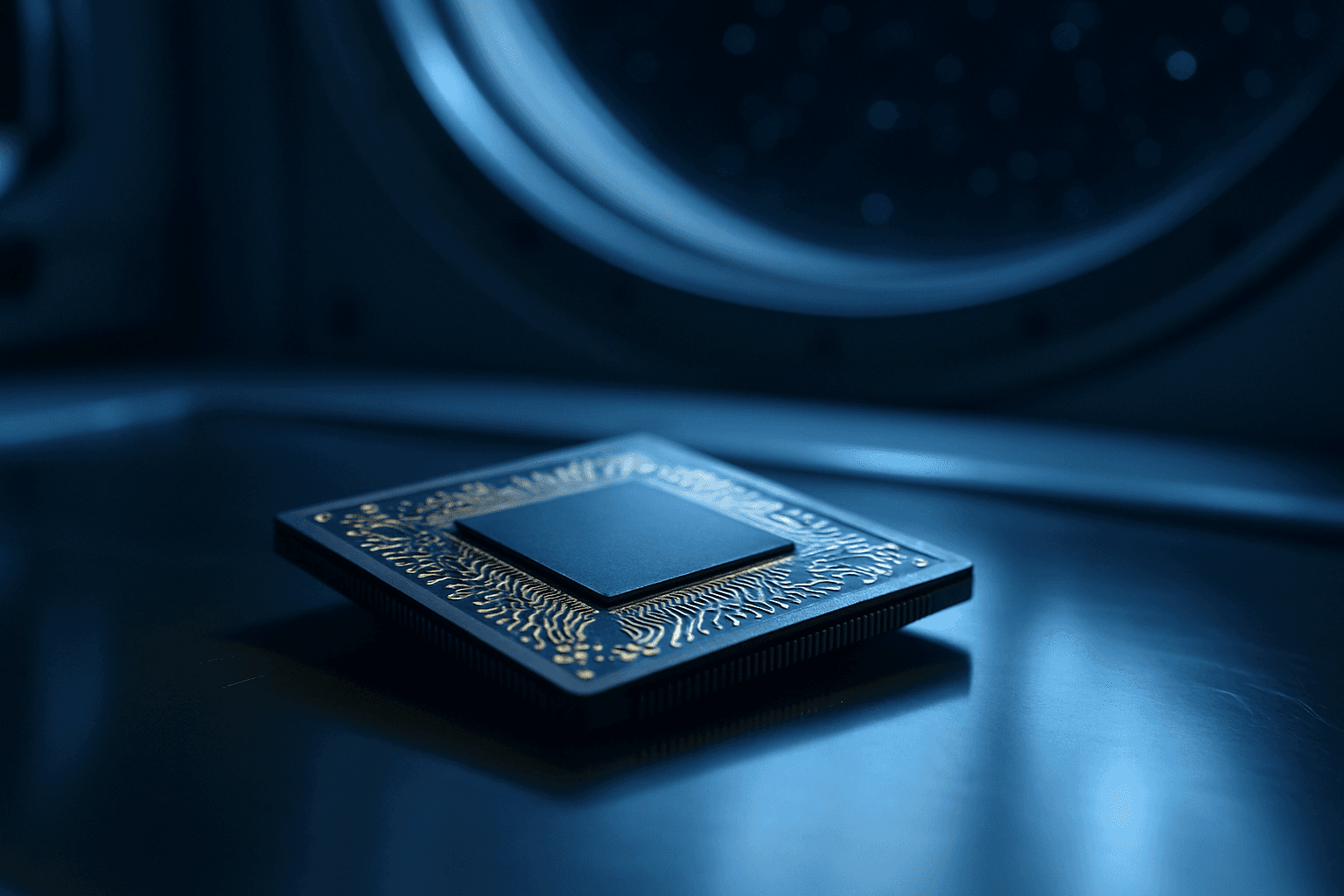
NASA Unveils AI Chip 500 Times Faster Than Space Computers
NASA has developed a new AI-ready processor reported to be 500 times faster than current space-rated computers.
What Happened
NASA has developed a new artificial intelligence processor designed for use aboard spacecraft, with performance benchmarks reported at 500 times the speed of computers currently deployed in space missions. The chip is intended to give future spacecraft onboard processing capabilities that would allow autonomous decision-making without reliance on ground-based control.
Background
Spacecraft have historically operated under severe computational constraints. The radiation-hardened processors used in space-rated systems are purpose-built to survive the harsh environment of orbit and deep space, but that hardening process has traditionally come at the cost of processing speed. As a result, most complex data analysis from space instruments, including imaging, sensor fusion, and navigation calculations, has been performed on the ground after raw data is transmitted back to Earth.
This dependency on Earth-based processing introduces latency. For missions operating at significant distances from Earth, such as deep space probes or future crewed missions to Mars, communication delays can range from minutes to hours in each direction. The delay makes real-time autonomous response to changing conditions effectively impossible under the current architecture.
NASA has been investigating onboard AI processing capabilities as part of broader efforts to increase spacecraft autonomy. The agency has previously tested machine learning tools for tasks including terrain navigation, equipment fault detection, and scientific target identification on planetary surfaces.
The New Processor
The newly announced chip is described as AI-ready, meaning it is designed to run the matrix and vector operations that underpin modern machine learning inference workloads. The 500-times performance figure positions it substantially ahead of processors currently certified for space operation.
The processor is intended to enable spacecraft to analyze data locally, identify targets or anomalies, make navigation adjustments, and respond to system faults without waiting for instructions from ground controllers. These capabilities are considered particularly relevant for planetary surface missions, orbital observation platforms, and any mission profile where communication windows with Earth are limited or intermittent.
The chip would allow, for example, an orbital Earth observation satellite to process and filter imagery onboard, transmitting only scientifically or operationally relevant data rather than raw image streams. This would reduce the bandwidth demands placed on deep space communication networks, which remain a constrained resource across the agency's mission portfolio.
Context and Significance
The development comes as both government space agencies and commercial operators are increasing the computational demands placed on spacecraft. Earth observation constellations, lunar surface missions under the Artemis program, and planned Mars surface operations all require higher levels of onboard intelligence than legacy processors support.
The commercial space sector has also been pushing toward more capable onboard processing. Companies including SpaceX, Planet Labs, and a range of defense-focused satellite operators have been integrating more capable processors into their platforms, though space certification of commercial off-the-shelf chips remains a technical and regulatory challenge.
NASA's development of a purpose-built AI processor signals an intent to close the gap between commercial AI hardware capabilities and what is available to missions operating in the radiation environment of space.
What It Means in Practice
If integrated into future spacecraft, the processor would shift a portion of the science and operations workload from ground teams to the vehicle itself. Missions could respond to time-sensitive phenomena, such as transient astronomical events or rapidly changing weather systems on other planets, within the span of onboard processing cycles rather than Earth communication round-trips.
The chip could also reduce operational costs over a mission's lifetime by lowering the volume of raw data that needs to be downlinked and processed by ground infrastructure.
What Comes Next
NASA has not announced a specific mission or launch timeline for hardware incorporating the new processor, and the chip is expected to undergo further testing and space certification evaluation before operational deployment.
Get our editors' take on what it all means. Read the Editor's Blog →