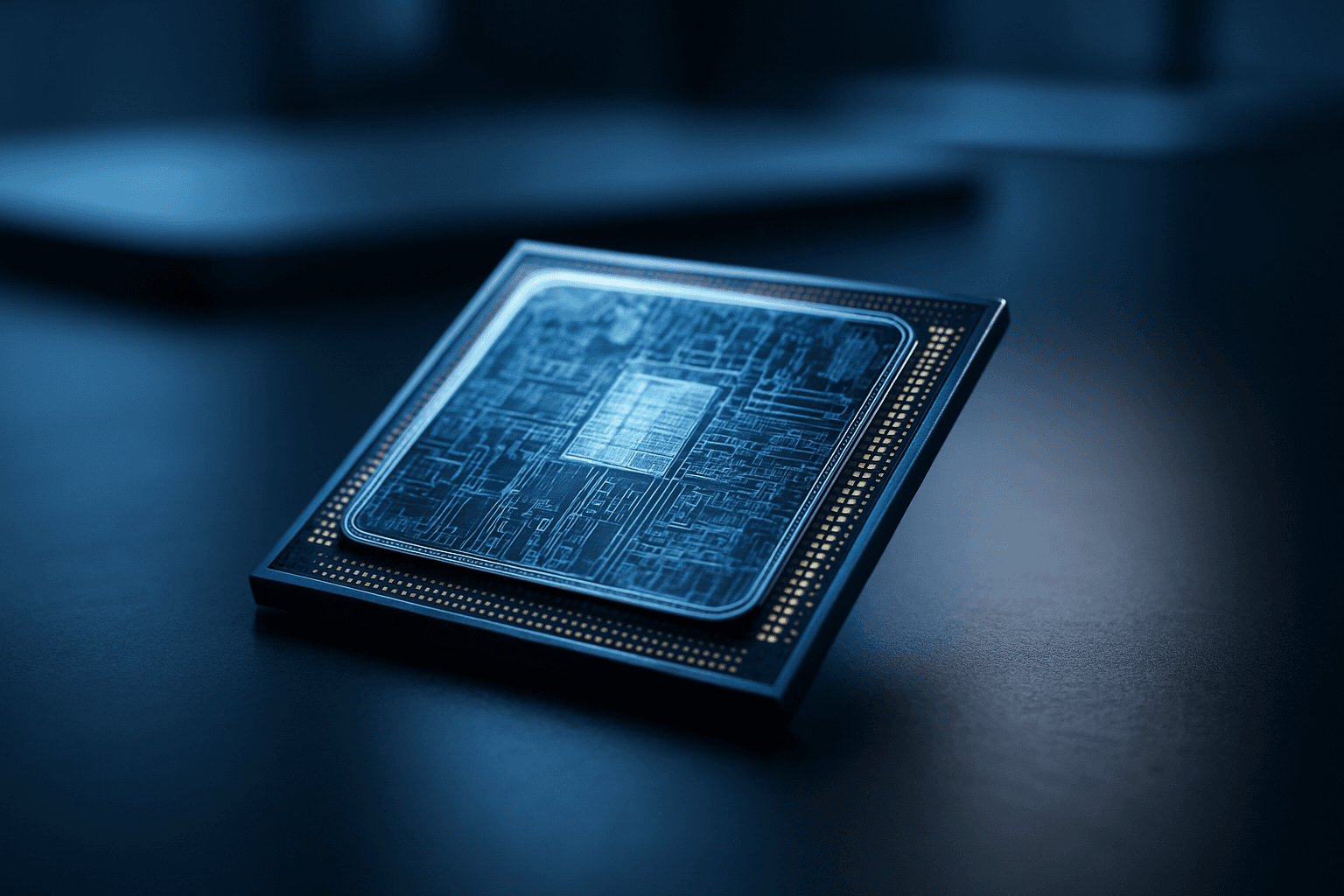
Nvidia Launches Personal AI Chip, Calls It Computer Reinvention
Nvidia has announced a new AI chip designed for personal computers, with CEO Jensen Huang describing it as a reinvention of the computer.
What Happened
Nvidia on Monday announced a new artificial intelligence chip targeted at personal computers, with chief executive Jensen Huang describing the product as the "reinvention of the computer." The announcement marks the company's latest expansion beyond data center hardware into consumer-facing computing devices.
Background
Nvidia has for several years dominated the market for AI accelerator chips used in large data centers, where its graphics processing units power the training and deployment of machine learning models for companies including Microsoft, Google, and Amazon. The company's data center revenue has driven dramatic growth in its market valuation, making it one of the most valuable companies in the world by market capitalization.
The move into personal computer AI chips represents a strategic extension of Nvidia's product line into the consumer and enterprise desktop and laptop segments. The PC chip market has historically been led by Intel and AMD, though Nvidia has long supplied discrete graphics cards for consumer machines. A dedicated AI chip for personal computers would place Nvidia in more direct competition with those manufacturers, as well as with Qualcomm, which has marketed its Snapdragon X processors partly on the basis of on-device AI capabilities.
Nvidia's announcement comes at a moment of broad industry movement toward running AI workloads locally on devices rather than solely through cloud-based servers. Microsoft has promoted a category of machines it calls Copilot Plus PCs, which require a minimum level of on-device AI processing performance. Apple has similarly marketed on-device AI features under its Apple Intelligence branding.
The Announcement
Huang made the announcement and used the phrase "reinvention of the computer" to characterize the significance of the new chip, according to BBC reporting on the event. Specific technical specifications, pricing, and a general availability date were not detailed in the wire reports available at time of publication.
The announcement follows Nvidia's separate disclosure of Cosmos 3, an open physical AI foundation model the company says tops current leaderboards and is built on a mixture-of-transformers architecture. That model is aimed at robotics and physical AI applications rather than personal computing. Together, the two announcements indicate Nvidia is broadening its product and software portfolio across multiple computing segments simultaneously.
What It Means in Practice
A dedicated AI chip for personal computers would allow users to run AI-powered applications locally, without routing data or requests through remote servers. This has implications for response latency, data privacy, and the cost of AI-enabled software for consumers and business users who do not rely on cloud subscriptions for AI tasks.
The personal computer market ships several hundred million units annually, according to industry research firms, representing a substantially larger unit volume than the data center accelerator market even as the latter commands higher per-unit revenue. Nvidia entering the segment with a purpose-built AI chip would expand its total addressable market.
PC manufacturers, software developers, and platform operators would need to integrate and certify support for any new Nvidia chip architecture before products reach consumers. The degree to which existing software ecosystems support the chip will affect how quickly adoption can occur at the application level.
What Happens Next
Nvidia has not yet announced a release date or retail pricing for the personal computer AI chip, and further technical details are expected to be disclosed in subsequent communications from the company.
Get our editors' take on what it all means. Read the Editor's Blog →