Shanghai AI Lab Cracks Photoresist Production for Semiconductor Manufacturing
A joint team led by Shanghai AI Laboratory has solved a key stable-production challenge for photoresists used in semiconductor manufacturing.
What Happened
A joint research team led by Shanghai AI Laboratory announced a breakthrough in the stable production of photoresists, a core material used in semiconductor manufacturing, according to a report published by TrendForce on May 20, 2026. The development addresses a longstanding challenge in producing photoresists consistently at scale, a problem that has constrained chip fabrication supply chains.
Background
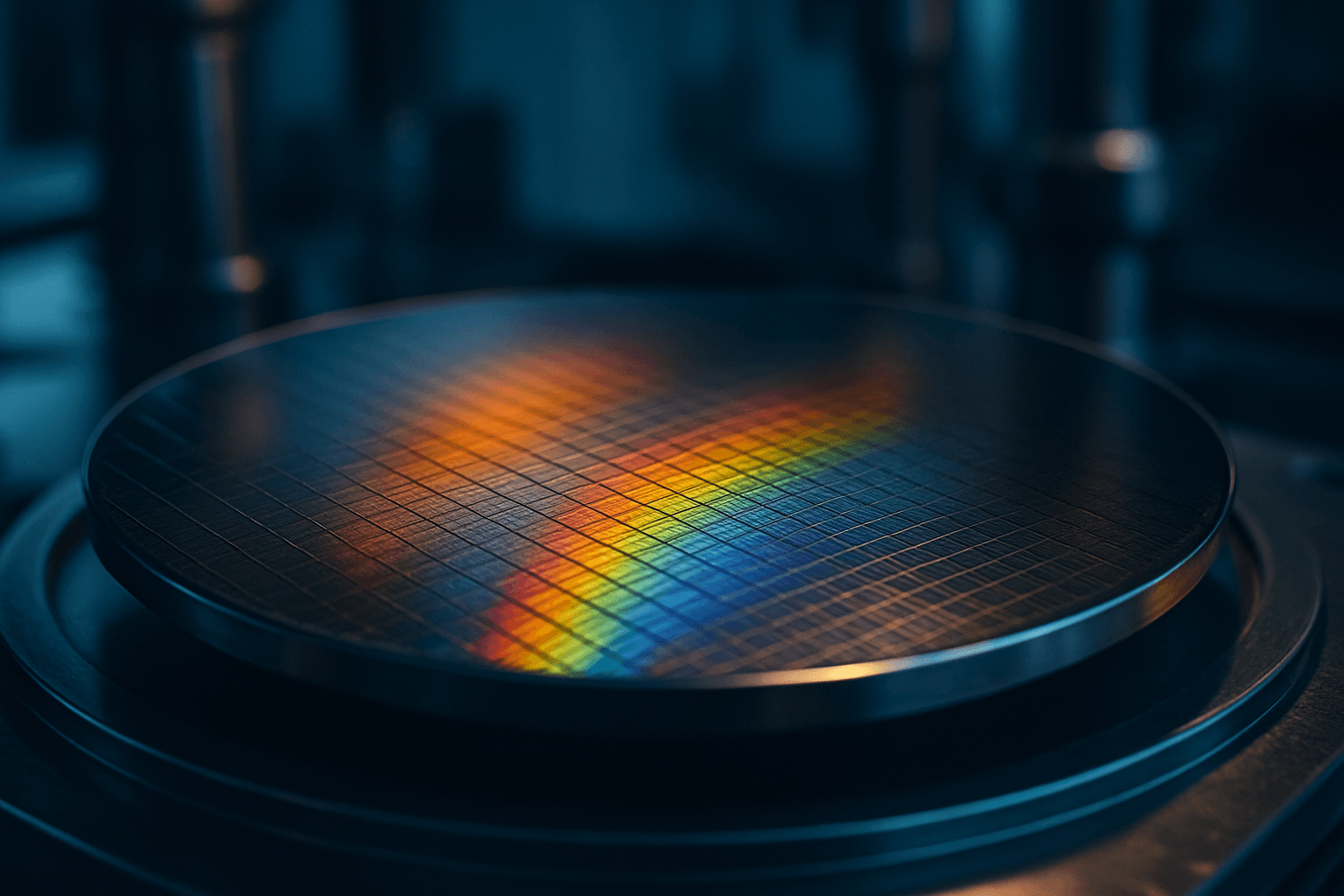
Photoresists are light-sensitive chemical compounds applied to semiconductor wafers during the lithography stage of chip manufacturing. They are essential to the process of printing circuit patterns onto silicon, and their quality and consistency directly affect chip yield and performance. The global photoresist market is dominated by a small number of Japanese and American chemical companies, including JSR, Tokyo Ohka Kogyo, Shin-Etsu Chemical, and DuPont. China has sought to develop domestic photoresist capabilities as part of broader efforts to reduce dependence on foreign suppliers amid ongoing export restrictions targeting its semiconductor industry.
Shanghai AI Laboratory, known internationally as Shanghai Artificial Intelligence Laboratory, is a Chinese state-backed research institution founded in 2020. It has focused on large-scale AI model development and applied AI research across scientific and industrial domains. The laboratory gained wider recognition for its work on foundation models and has increasingly directed research toward materials science and manufacturing applications.
What Was Announced
According to TrendForce, the joint team led by Shanghai AI Laboratory identified and addressed the stable production challenge for photoresists, though the specific institutions comprising the full research team were not detailed in the available wire report. The announcement describes the result as a breakthrough in achieving consistent, stable output of the material, rather than a one-time laboratory synthesis. Stable production implies the ability to manufacture photoresists repeatedly within tight quality tolerances, which is a distinct and more commercially significant hurdle than initial synthesis.
The wire report did not disclose the specific type or generation of photoresist involved, such as whether the work pertains to deep ultraviolet or extreme ultraviolet lithography-grade materials. EUV-compatible photoresists represent the most advanced and restricted category, used in the production of leading-edge chips at nodes below 7 nanometers.
Context in the Semiconductor Supply Chain
Photoresist production has been identified by Chinese government planners and industry analysts as one of several critical chokepoints in domestic semiconductor self-sufficiency efforts. Export controls introduced by the United States and Japan since 2022 have restricted the transfer of certain advanced semiconductor materials and equipment to China, increasing pressure on domestic research institutions and chemical producers to develop independent supply chains.
The involvement of an AI laboratory in a materials chemistry breakthrough reflects a pattern across Chinese research institutions of applying machine learning techniques to accelerate materials discovery and process optimization, areas where AI-assisted simulation and prediction have shown measurable reductions in experimental iteration time.
What It Means in Practice
Stable photoresist production is a prerequisite for commercial-scale chip fabrication using domestically sourced materials. If the announced result can be transferred from a research setting to industrial production, it would represent a step toward reducing Chinese chipmakers' reliance on imported photoresists. The wire report did not specify whether any semiconductor fabrication facility has adopted or agreed to test the material produced through this process, nor did it provide data on production volume or purity benchmarks achieved.
No financial figures, commercialization timelines, or partner manufacturers were identified in the available report.
What Comes Next
Shanghai AI Laboratory has not announced a public release date for a full technical paper or further details on the research team composition, and TrendForce indicated the development was reported as of May 20, 2026, with additional disclosures expected through subsequent official channels from the laboratory.
Get our editors' take on what it all means. Read the Editor's Blog →