South Korean AI Chip Workers Press for Larger Share of Sector Profits
Surging profits at major South Korean microchip firms have triggered intensifying worker demands over pay packages and profit-sharing arrangements.
What Happened
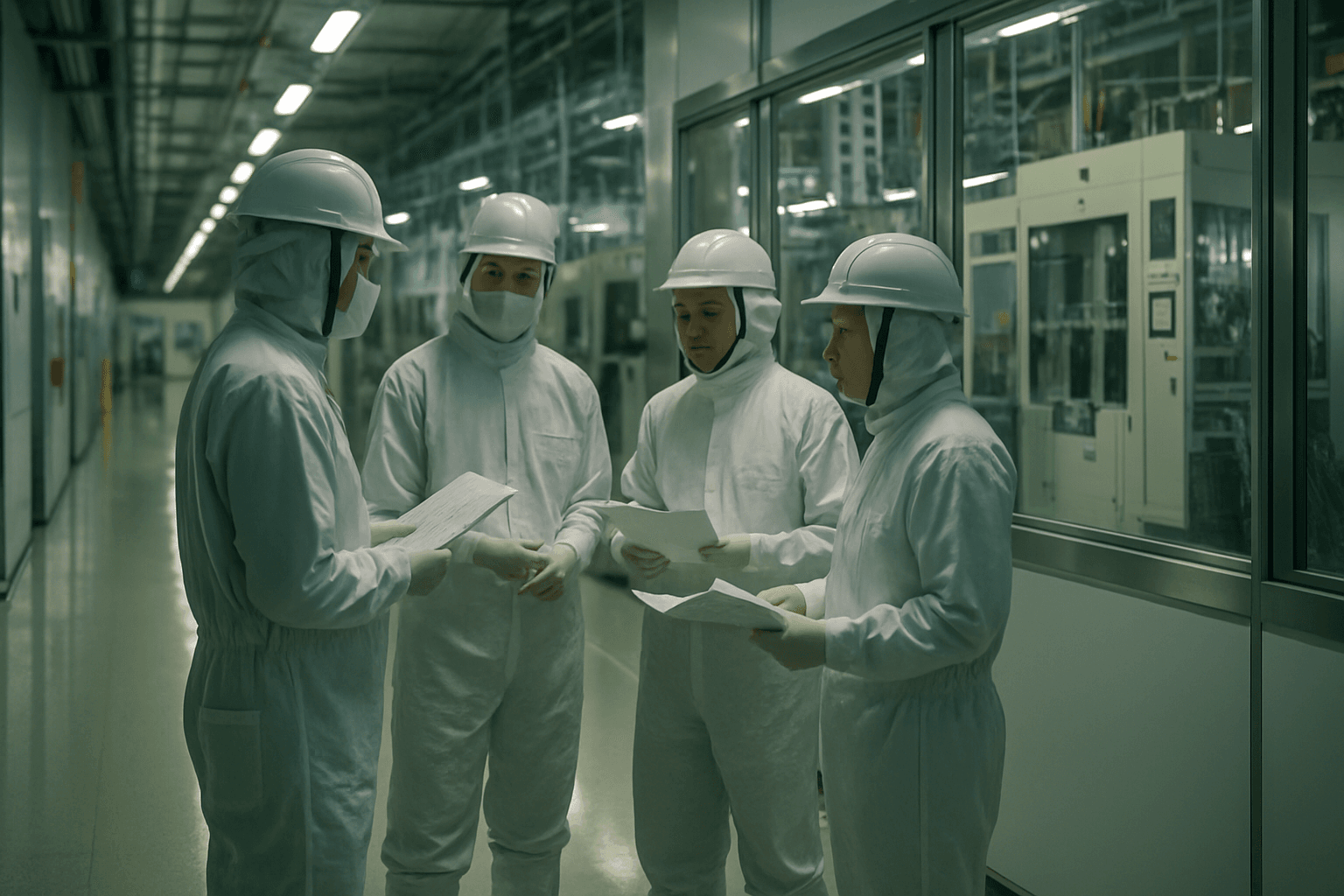
Workers at South Korean microchip companies are escalating demands for higher pay and improved profit-sharing arrangements, citing the record revenues and elevated market valuations generated by the global boom in AI-related semiconductor demand. The pressure is concentrated at firms supplying chips for artificial intelligence infrastructure, where financial results have risen sharply in recent years.
Background
South Korea is home to two of the world's largest memory chip manufacturers, Samsung Electronics and SK Hynix, both of which supply high-bandwidth memory chips used in AI accelerators produced by companies including Nvidia. SK Hynix in particular has reported successive record quarters tied to demand for HBM chips used in AI training and inference hardware.
The semiconductor industry globally has seen valuations climb significantly as hyperscale cloud providers and AI developers accelerate capital expenditure on compute infrastructure. In South Korea, that financial performance has sharpened attention to how gains are distributed between company shareholders and the workforces producing the chips.
Labor relations in South Korea's semiconductor sector have historically been more restrained than in other industries, but union activity has grown at both Samsung and SK Hynix in recent years. Samsung Electronics faced its first-ever strike by its main union in 2024, a development that drew attention to shifting labor dynamics within a sector previously regarded as relatively stable from an industrial relations standpoint.
The Workers' Position
Workers and union representatives have described the current moment as one of unusual leverage, pointing to the difficulty companies would face in disrupting chip production during a period of high customer demand and tight supply for advanced memory products. The phrase reported in wire coverage is that workers hold "immense" leverage given the timing and scale of current profits.
Demands center on pay packages, bonuses tied to company performance, and the structure of profit-sharing schemes. Specific figures for demands or current compensation levels were not detailed in available wire reports, and neither Samsung nor SK Hynix had issued public statements responding to the characterization of labor pressure at the time of publication.
Industry Context
The question of how semiconductor sector gains are distributed is not limited to South Korea. Chip workers in Taiwan, the United States, and Europe have similarly raised compensation questions as company revenues have grown. In the United States, the CHIPS and Science Act included provisions encouraging companies receiving federal subsidies to consider workforce investment and labor standards, though enforcement mechanisms differ from collective bargaining.
South Korea's labor law framework allows for collective bargaining at the enterprise level, meaning negotiations occur company by company rather than across the sector. That structure means outcomes at Samsung and SK Hynix are likely to differ and will be determined through separate processes.
The AI chip supply chain has brought unusual public visibility to semiconductor manufacturing workforces that previously operated with limited public profile. As AI investment has become a prominent business and policy topic, the companies and facilities producing the underlying hardware have drawn increased scrutiny from investors, governments, and labor advocates.
What Happens Next
Union representatives at Samsung Electronics and SK Hynix are expected to continue formal negotiations with management in the coming months, with outcomes subject to South Korea's standard enterprise bargaining procedures.
Get our editors' take on what it all means. Read the Editor's Blog →