High School Student's AI Finds 1.5 Million Cosmic Objects in NASA Data
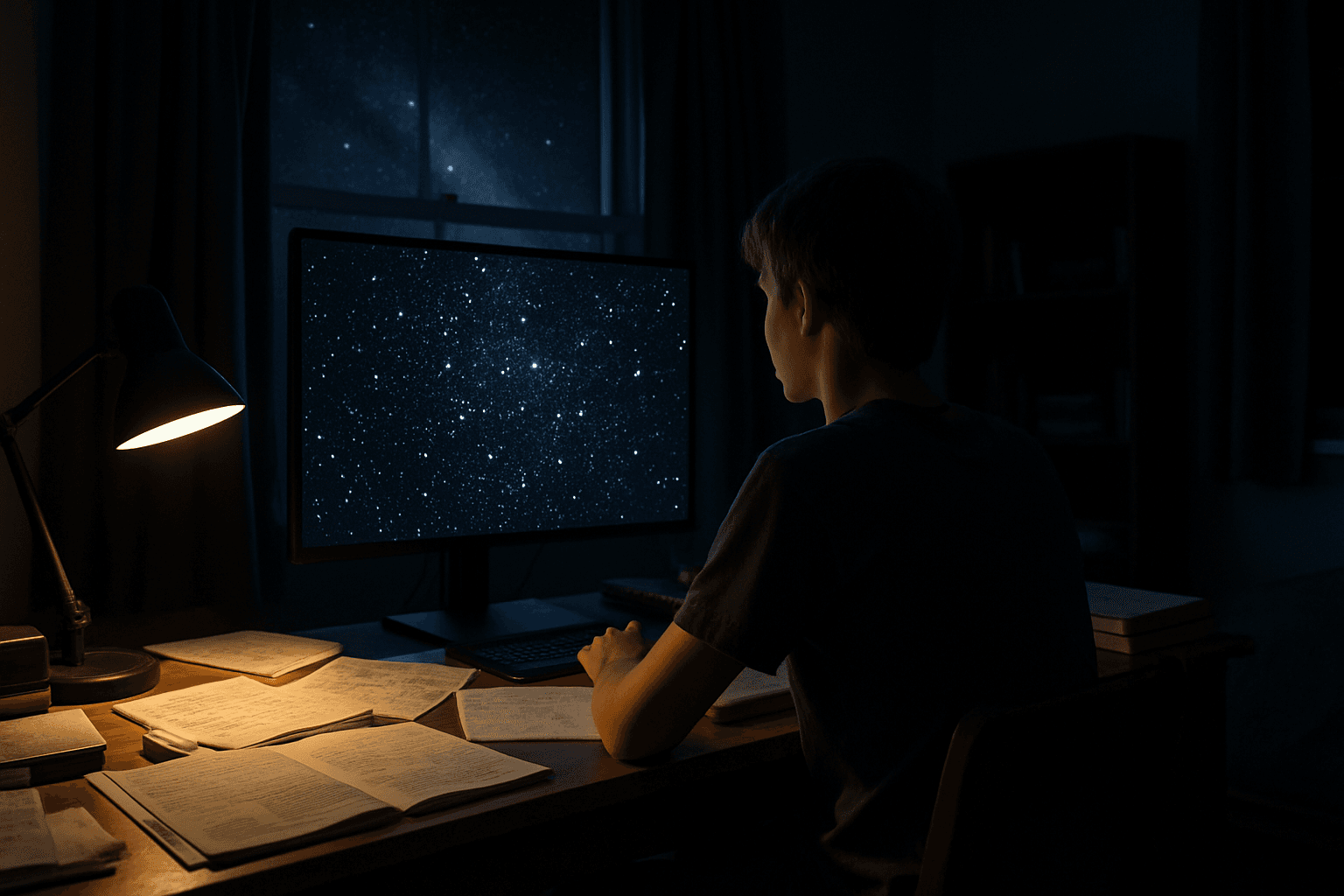
A California teenager used a self-built AI tool to identify 1.5 million previously uncatalogued cosmic phenomena in archived NASA data.
What Happened
A California high school student has used a self-developed artificial intelligence tool to identify 1.5 million previously uncatalogued cosmic phenomena hidden within archived NASA data, earning formal recognition from the space agency. The discovery, reported on June 29, represents one of the largest single-instance expansions of known cosmic objects attributed to an independent researcher.
What the Student Built
The student developed an AI system specifically designed to mine existing NASA archival datasets, applying automated pattern recognition to identify signals and structures that had not been flagged in prior analyses. The tool processed large volumes of stored observational data and surfaced objects that had remained invisible to earlier, non-AI review methods. Details about the specific astronomical categories of the 1.5 million phenomena were reported by Futura Sciences, though the wire report did not specify whether the objects include galaxies, nebulae, star clusters, or other classifications.
NASA's Response
NASA formally praised the student's work, according to the Futura Sciences report. The wire did not include a direct quote from a named NASA official, but the agency's acknowledgment constitutes an institutional endorsement of both the methodology and the findings. Formal recognition from NASA for independent, student-led research of this scale is uncommon.
Background
NASA maintains extensive public archives of observational data collected by its telescopes and space instruments, including datasets from missions such as the Hubble Space Telescope, the Wide-field Infrared Survey Explorer, and more recently the James Webb Space Telescope. These archives are made accessible to researchers worldwide, including independent and amateur scientists, under the agency's open data policies. Prior cases of citizen scientists and independent researchers making meaningful discoveries in NASA archival data exist, but findings at the scale of 1.5 million objects are rare.
The student's project fits within a broader pattern of AI tools being applied to large scientific datasets to accelerate discovery. In astronomy specifically, machine learning systems have been used by professional research teams to classify galaxies, detect exoplanet transits, and identify gravitational lensing events. The application of such methods by a secondary school student working independently marks a notable data point in that trend.
How the AI Was Applied
The approach relied on training or deploying an AI model against archived data rather than collecting new observations. This method, sometimes described as data mining or retrospective analysis, allows researchers to extract new information from existing records without requiring telescope time or new instrumentation. The wire report describes the student as having mined archived NASA data, indicating the discoveries were not made through live observation but through computational reanalysis of stored material.
What It Means in Practice
The 1.5 million objects identified now represent a body of candidate phenomena requiring follow-up classification and verification by professional astronomers. Standard scientific practice requires independent confirmation of machine-identified detections before they are incorporated into formal catalogues. The scale of the finding, if verified, would represent a meaningful addition to existing astronomical catalogues, some of which, such as the Sloan Digital Sky Survey catalogue, contain tens of millions of objects accumulated over decades of institutional research.
The student's achievement also illustrates the accessibility of AI development tools and public scientific datasets to non-institutional researchers, including those at the secondary school level.
What Comes Next
The findings are expected to undergo review by professional astronomers before any formal incorporation into NASA or community-maintained astronomical catalogues.
Get our editors' take on what it all means. Read the Editor's Blog →