UN Releases First Global AI Governance Report, Opens Multilateral Dialogue
The United Nations published its first report on AI governance, finding development fast, concentrated, and largely unregulated.
UN Releases First Global AI Governance Report, Opens Multilateral Dialogue
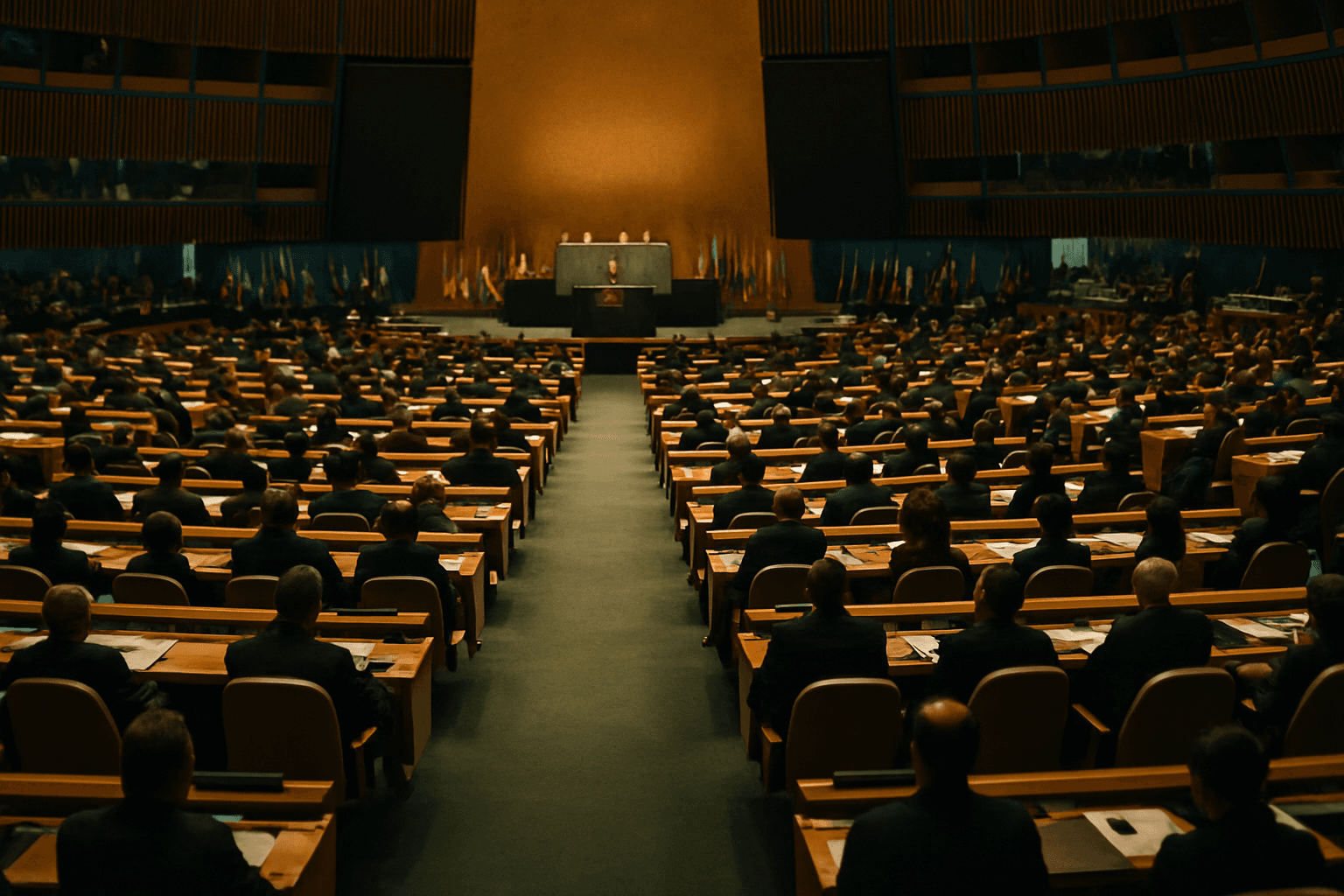
The United Nations released its first comprehensive report on artificial intelligence governance on July 7, 2026, concluding that AI development is advancing rapidly, concentrated among a small number of actors, and operating with minimal international oversight. The report coincided with the launch of the Global Dialogue on AI Governance, described as the first multilateral forum in which all member countries hold a seat at the table.
What Happened
The UN published its inaugural global AI governance report alongside the formal opening of the Global Dialogue on AI Governance. The report characterizes the current state of AI development in three terms: fast, concentrated, and barely governed. The Global Dialogue is structured to give every UN member state a formal role in shaping international AI policy, a structure that has not previously existed in any multilateral forum dedicated to the technology.
The initiative marks the first time the United Nations has produced a system-wide assessment of AI's trajectory and simultaneously established a standing mechanism for intergovernmental deliberation on the technology's governance.
Background
Prior to this report, international efforts to govern AI were fragmented across regional and national bodies. The European Union enacted its AI Act, which came into force in stages beginning in 2024. The United States issued executive orders and agency-level guidance. China established its own domestic AI regulations. No binding multilateral framework existed to coordinate these efforts or to include lower-income nations that lack the resources to develop independent AI regulatory capacity.
The UN Secretary-General's office had previously called for a global AI governance body in 2023, and a high-level advisory body on AI was convened that year. The 2026 report and the Global Dialogue represent the institutional output of that process.
The concentration finding in the report reflects a pattern that researchers and policy analysts have documented for several years: the majority of frontier AI model development, computing infrastructure, and investment is controlled by a small number of companies headquartered in the United States and China.
What the Report Found
According to the wire report summary, the UN assessment identifies three defining characteristics of the current AI landscape. First, development is occurring at a pace that outstrips existing regulatory and governance mechanisms. Second, capability and infrastructure are concentrated in a limited number of jurisdictions and private entities. Third, governance frameworks, whether national, regional, or international, remain insufficient relative to the scale and speed of deployment.
The report does not, based on available wire reporting, prescribe specific binding rules. Its primary function is diagnostic and agenda-setting for the Global Dialogue process.
The Global Dialogue Mechanism
The Global Dialogue on AI Governance is structured to include all UN member states, a feature that distinguishes it from earlier AI governance forums, which tended to be convened by and for high-income, technologically advanced nations. The inclusion of developing nations is notable given that many countries in Africa, Latin America, and Southeast Asia are significant consumers and deployment targets for AI systems but have had limited influence over how those systems are built or regulated.
The specific procedural rules, voting mechanisms, and authority of the Global Dialogue, including whether it can produce binding agreements or only recommendations, were not detailed in available wire reporting.
What Happens Next
The Global Dialogue on AI Governance is expected to hold further sessions in the coming months, with member states scheduled to begin formal deliberations on the report's findings and potential frameworks for international coordination.
Get our editors' take on what it all means. Read the Editor's Blog →